Biotrade
Biotrade relates to the production and trade of products and ingredients from local ecosystems. When it follows strict conditions of ethics and sustainability, it is an important tool to reconciliate economy and biodiversity.
More on the challenges of biodiversity here.
Context
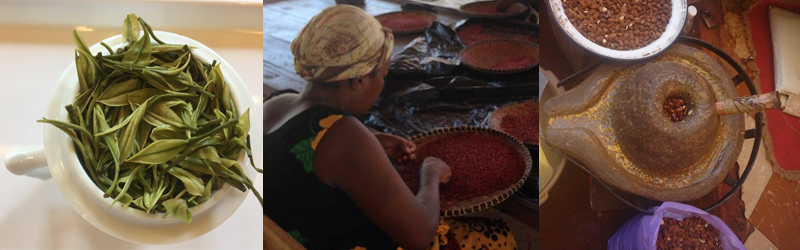
Biodiversity produces extremely diverse and valuable resources for human beings: food, health, energy, beauty, pleasure. These resources are often fragile. When managed with respect for ecosystems, work and traditional knowledge, they are levers for human well-being, protect biodiversity and the well-being of local rural people.
Tea, cocoa, coffee, aromatic and medicinal plants, spices and cosmetic ingredients are fragile resources appreciated by everybody.
Our approach
- a classical market approach (market research, monitoring and quality control, business plans, etc.);
- the principles of fair trade (fair and equitable payments, préparation to certification when desireable);
- compliance studies, specifically on the Nagoya Protocol on Access to Genetic Resources and the Fair and Equitable Sharing of Benefits Arising from their Utilization;
- the principles of an ecological economy (ecosystem review, accounting for externalities)
This approach allows to express the full potential of local know-how and ecosystems and agrosystems, creating value chains and brands of excellence, valued at their fair prices on national and international markets.
Our services
- Development of natural products: market study, quality control, business plans, capacity building.
- Ethics and sustainability: social responsibility, fair trade, organic agriculture, access and benefit sharing, certification.
- Legal advice: Convention on Biological Diversity and Nagoya protocol, regulation of imports in the European Union.
Our experience
- Ten years of expérience as a Fair Trade project manager for producers organizations and as a facilitator of an international community of practice on Fair Trade. Associate member of the World Fair Trade Organization.
- Twelve years of experience as a consultant for international cooperation agencies (UNDP, UNIDO, GIZ…) and for companies(cosmetics, ethical funds, etc.) in Latin America, Africa and South-East Asia.
- Expert of the Nagoya Protocol on Access to Genetic Resources and the Fair and Equitable Sharing of Benefits Arising from their Utilization, 10 studies conducted.
- Specialist in ecological economics, expert on access and benefit sharing of biodiversity and traditional knowledge.
- By sector: coffee (Latin America, East Africa), cocoa (Madagascar, West Africa), tea (China and Vietnam), cosmetic ingredients (Latin America, Africa), handicrafts and textiles (global).
Pierre worked as an expert for GIZ Nepal to support the herbal companies from Nepal to have business meetings with relevant importing companies of Europe. He was very dedicated and proactive in his approach which was well appreciated by the Nepali delegation. I wish him all the best for his future endeavors.
Value chain study of organic soybean from Togo
This study of the organic soy value chain in Togo was carried out in March and April 2018 for the German Cooperation Agency (GIZ), by an international team comprising a specialist of organic value chains, a specialist in conventional markets and a specialist in...
Value chain study of market gardening in eastern Chad
Introduction From February to April 2018, we conducted two studies of food value chains, in very different contexts and for different purposes: A study on market gardening in eastern Chad for Care International A study of the organic soybean value chain in Togo for...
TEEB proposes an evaluation of agriculture and food chains
Pierre Johnson participated to TEEB (The Economics of Ecosystems and Biodiversity) writers workshop on AgriFood, that took place in UNEP's offices in Paris on May 2016, and to the preparation of a chapter of the Scientific and Economic Foundations Report, which will...
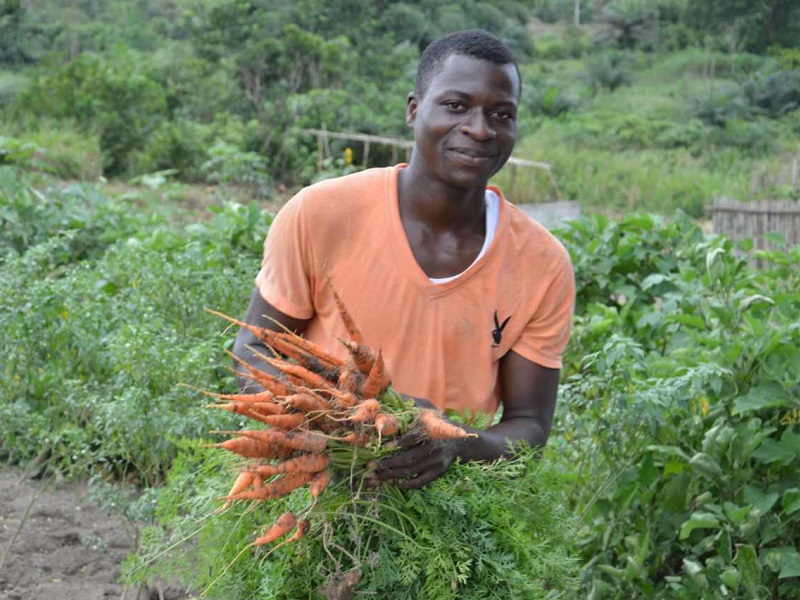
In Ghana, producers and consumers make organic farming grow
In Ghana, fossil fuels represent a real boon for the state, in terms of income and foreign exchange. But just after the sales of hydrocarbons, comes that of cocoa beans, and other cash crops. However, oil extraction contributes to climate disruption, while the...
Fair Trade: a new label
Despite a sluggish context, fair trade market continues its growth. In France, it it reached 429 million euros and 11.1% growth in 2013. But before being a "market" trade fair is an innovative approach to national and international trade. Supported by an economic...
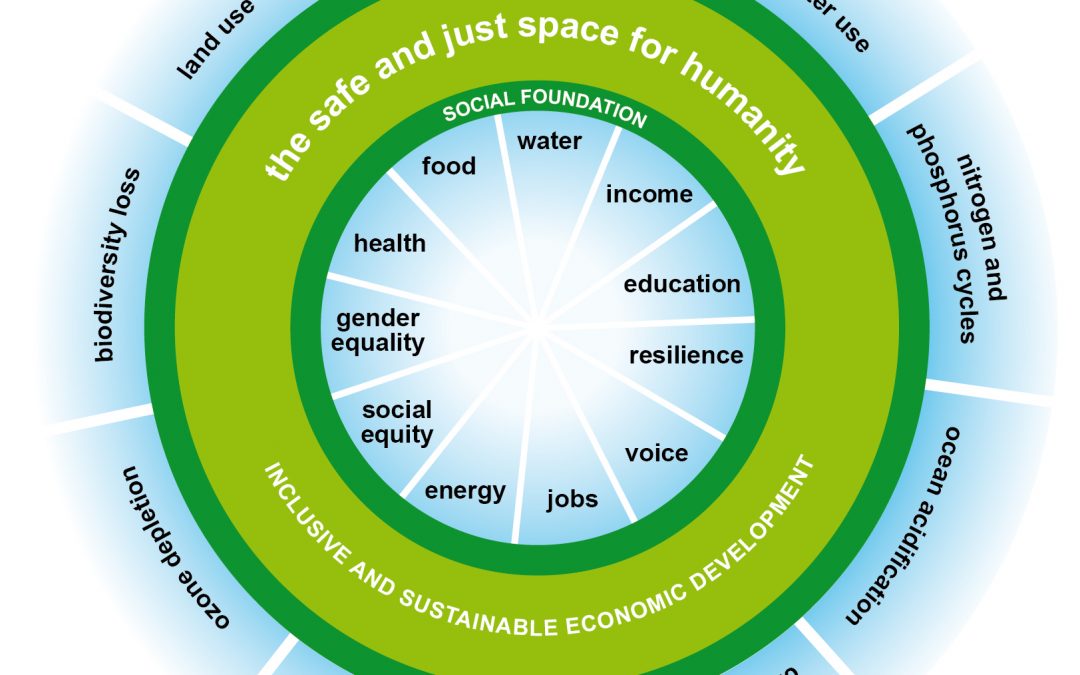
Planetary boundaries and the great transition
We live in an era of fast changes, in which many people, organizations or territories lack the keys of understanding, orientation and action. Our educational, managerial, and political systems have simply not prepared us for a world where the abundant resources of our planet are threatened, and where some fundamental balances are threatened. This article aims to provide some keys on the scientific analysis of “planetary boundaries”, a the starting point for the ecological and social transition.
Pierre W. Johnson
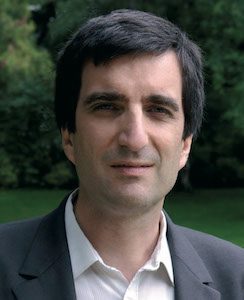
International consultant, study and sustainable development of natural products value chains. Specialist of markets of origin, quality and high value products. Expert on Access and Benefit Sharing.
Keynote speaker on transition to an ecological economy & society.
Member of the
International Value Links Association.
Associate expert to Tero.