Biotrade
Biotrade relates to the production and trade of products and ingredients from local ecosystems. When it follows strict conditions of ethics and sustainability, it is an important tool to reconciliate economy and biodiversity.
More on the challenges of biodiversity here.
Context
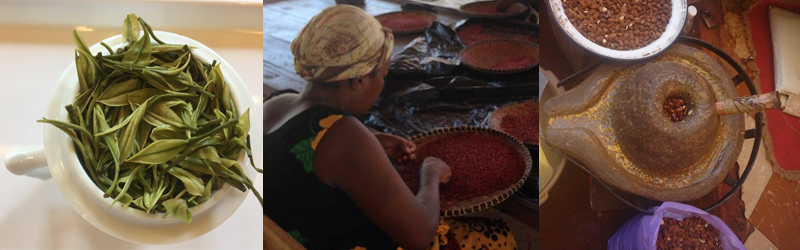
Biodiversity produces extremely diverse and valuable resources for human beings: food, health, energy, beauty, pleasure. These resources are often fragile. When managed with respect for ecosystems, work and traditional knowledge, they are levers for human well-being, protect biodiversity and the well-being of local rural people.
Tea, cocoa, coffee, aromatic and medicinal plants, spices and cosmetic ingredients are fragile resources appreciated by everybody.
Our approach
- a classical market approach (market research, monitoring and quality control, business plans, etc.);
- the principles of fair trade (fair and equitable payments, préparation to certification when desireable);
- compliance studies, specifically on the Nagoya Protocol on Access to Genetic Resources and the Fair and Equitable Sharing of Benefits Arising from their Utilization;
- the principles of an ecological economy (ecosystem review, accounting for externalities)
This approach allows to express the full potential of local know-how and ecosystems and agrosystems, creating value chains and brands of excellence, valued at their fair prices on national and international markets.
Our services
- Development of natural products: market study, quality control, business plans, capacity building.
- Ethics and sustainability: social responsibility, fair trade, organic agriculture, access and benefit sharing, certification.
- Legal advice: Convention on Biological Diversity and Nagoya protocol, regulation of imports in the European Union.
Our experience
- Ten years of expérience as a Fair Trade project manager for producers organizations and as a facilitator of an international community of practice on Fair Trade. Associate member of the World Fair Trade Organization.
- Twelve years of experience as a consultant for international cooperation agencies (UNDP, UNIDO, GIZ…) and for companies(cosmetics, ethical funds, etc.) in Latin America, Africa and South-East Asia.
- Expert of the Nagoya Protocol on Access to Genetic Resources and the Fair and Equitable Sharing of Benefits Arising from their Utilization, 10 studies conducted.
- Specialist in ecological economics, expert on access and benefit sharing of biodiversity and traditional knowledge.
- By sector: coffee (Latin America, East Africa), cocoa (Madagascar, West Africa), tea (China and Vietnam), cosmetic ingredients (Latin America, Africa), handicrafts and textiles (global).
Pierre worked as an expert for GIZ Nepal to support the herbal companies from Nepal to have business meetings with relevant importing companies of Europe. He was very dedicated and proactive in his approach which was well appreciated by the Nepali delegation. I wish him all the best for his future endeavors.
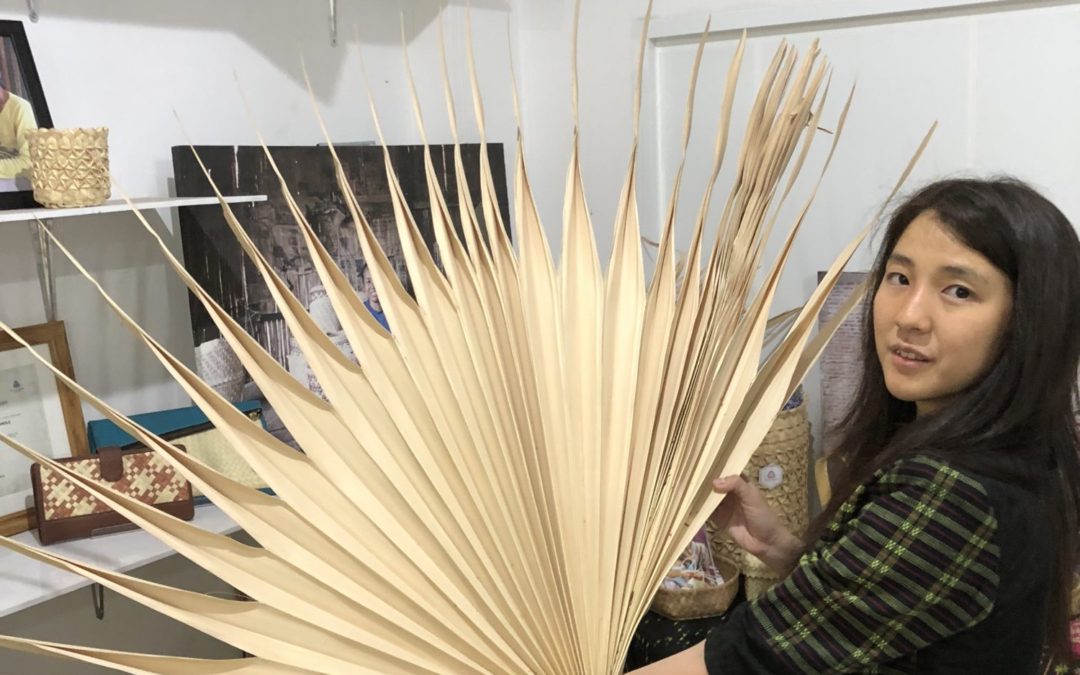
In Indonesia, Home Decoration is more prepared than Home Textiles for exports to Europe (CBI)
CBI is the Dutch agency of the Ministry of Economic Affairs and Climate Policy supporting the development of small and medium entreprises from developing countries in their efforts to export to Europe. Following are large extracts (slightly modified for the...
Value Chain Analysis for Home Decoration and Home Textiles in Indonesia
The value chain analysis of the Home Decoration and Home Textiles in Indonesia conducted by Pierre Johnson on behalf of CBI concluded in the potential of traditional textiles of Nusa Tenggara Timor islands, provided more market linkages and support could be provided, and of home decoration through better market responsiveness.
Foundations for the evaluation of agriculture and food systems
The Economics of Ecosystems and Biodiversity for Agriculture & Food (‘TEEBAgriFood’) is a study that will provide guidance and illustrations for comprehensive evaluations (i.e. including of the most significant externalities) of ‘eco-agri-food systems’*, whilst...
Artemisia: a plant, women and men against malaria
La Maison de l'Artemisia is non-governmental organization (NGO), a non-profit under French law, which has been supporting for several years the players of the production, marketing and use of medicinal plants of the Artemisia genus in Africa, because of their...
Recycling Carbon – Recycling carbon fiber
Carbon fiber is a modern material, widely used in the nautical, aeronautical, cycling and other sports industries. Until now, few companies offer repair, reuse or recycling solutions. With Recycling Carbon, it's done. The accelerated development of this non profit...
Soirée Permaculture et Transition – 9 nov. 2017 à Paris
Le réseau des Villes et Territoires en Transition en Ile-de-France propose le 9 novembre 2017 une soirée d'initiation sur le thème « Permaculture et Transition ». Organisée par Peter BENOIT et Pierre JOHNSON, nous avons décidé d'offrir cette soirée, pour rendre...
Pierre W. Johnson
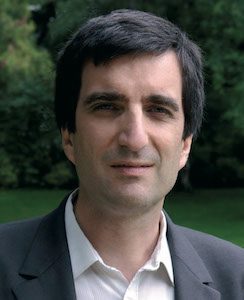
International consultant, study and sustainable development of natural products value chains. Specialist of markets of origin, quality and high value products. Expert on Access and Benefit Sharing.
Keynote speaker on transition to an ecological economy & society.
Member of the
International Value Links Association.
Associate expert to Tero.