Biotrade
Biotrade relates to the production and trade of products and ingredients from local ecosystems. When it follows strict conditions of ethics and sustainability, it is an important tool to reconciliate economy and biodiversity.
More on the challenges of biodiversity here.
Context
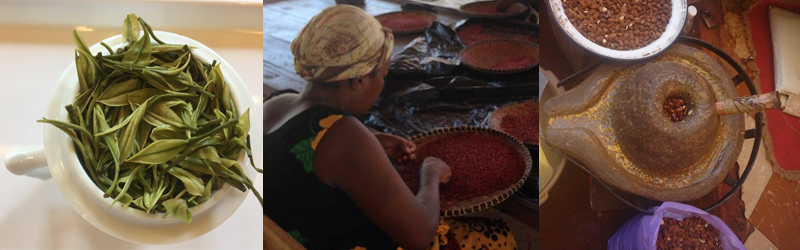
Biodiversity produces extremely diverse and valuable resources for human beings: food, health, energy, beauty, pleasure. These resources are often fragile. When managed with respect for ecosystems, work and traditional knowledge, they are levers for human well-being, protect biodiversity and the well-being of local rural people.
Tea, cocoa, coffee, aromatic and medicinal plants, spices and cosmetic ingredients are fragile resources appreciated by everybody.
Our approach
- a classical market approach (market research, monitoring and quality control, business plans, etc.);
- the principles of fair trade (fair and equitable payments, préparation to certification when desireable);
- compliance studies, specifically on the Nagoya Protocol on Access to Genetic Resources and the Fair and Equitable Sharing of Benefits Arising from their Utilization;
- the principles of an ecological economy (ecosystem review, accounting for externalities)
This approach allows to express the full potential of local know-how and ecosystems and agrosystems, creating value chains and brands of excellence, valued at their fair prices on national and international markets.
Our services
- Development of natural products: market study, quality control, business plans, capacity building.
- Ethics and sustainability: social responsibility, fair trade, organic agriculture, access and benefit sharing, certification.
- Legal advice: Convention on Biological Diversity and Nagoya protocol, regulation of imports in the European Union.
Our experience
- Ten years of expérience as a Fair Trade project manager for producers organizations and as a facilitator of an international community of practice on Fair Trade. Associate member of the World Fair Trade Organization.
- Twelve years of experience as a consultant for international cooperation agencies (UNDP, UNIDO, GIZ…) and for companies(cosmetics, ethical funds, etc.) in Latin America, Africa and South-East Asia.
- Expert of the Nagoya Protocol on Access to Genetic Resources and the Fair and Equitable Sharing of Benefits Arising from their Utilization, 10 studies conducted.
- Specialist in ecological economics, expert on access and benefit sharing of biodiversity and traditional knowledge.
- By sector: coffee (Latin America, East Africa), cocoa (Madagascar, West Africa), tea (China and Vietnam), cosmetic ingredients (Latin America, Africa), handicrafts and textiles (global).
Pierre worked as an expert for GIZ Nepal to support the herbal companies from Nepal to have business meetings with relevant importing companies of Europe. He was very dedicated and proactive in his approach which was well appreciated by the Nepali delegation. I wish him all the best for his future endeavors.
Biodiversity: a common challenge
Biodiversity is the diversity and variety of life. A permanent source of creativity, many of us see it as a distant topic from our economic and social activities. However, most of these activities, and our common welfare depend at one level or another on the...
Fairtrade cotton looking for a new start
Participation of the entire sector Fairtrade, the main fair trade label, organized the International Forum of Fairtrade and fair-organic cotton in West Africa, in Paris on 15 March 2016. All the industry players were present for this edition: Representatives of...
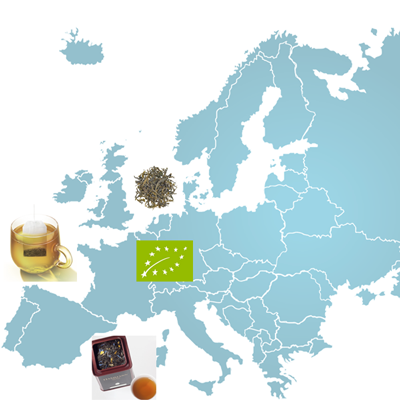
Presentation on organic markets in Europe at China Anji Bai Cha White Tea expo
On Friday March 24, 2017, Pierre Johnson made a presentation on organic markets in Europe and the challenges for Chinese tea at the Anji Bai White Tea Expo. Presentation (on SlideShare) and photos here. Information and...
Social entrepreneurs and innovators, transformers or alibis of the system? SOIA Europe (4)
This last article of the series "social entrepreneurs and innovators SOIA Europe" shows the wealth of meetings and exchange of ideas at the Social Innovation Assembly in Amsterdam in November 2013. Among those present were Daniel Truran, EBBF collaborator, "mindful...
European social entrepreneurship against food waste at SOIA Europe (3)
Our third chronicle of the European Social Innovation Assembly (SOIA) in Amsterdam is dedicated to the answer to food waste. The cloud against food waste In Europe, 30% of the food are thrown away before being eaten. Multiple causes explain this situation, which can...
Social entrepreneurship and social innovation for a more united world at SOIA Europe (1)
On Monday 26 and Tuesday 27, November, 2013 the first European Social Innovation Assemblytook place in Amsterdam. Organized by Fay Divina, this event, unique in its kind, brought together 100 social innovators from the 4 corners of Europe, and even North America and...
Pierre W. Johnson
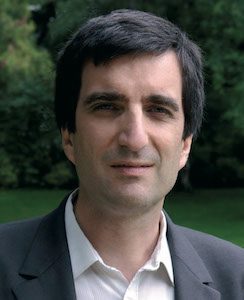
International consultant, study and sustainable development of natural products value chains. Specialist of markets of origin, quality and high value products. Expert on Access and Benefit Sharing.
Keynote speaker on transition to an ecological economy & society.
Member of the
International Value Links Association.
Associate expert to Tero.