Biotrade
Biotrade relates to the production and trade of products and ingredients from local ecosystems. When it follows strict conditions of ethics and sustainability, it is an important tool to reconciliate economy and biodiversity.
More on the challenges of biodiversity here.
Context
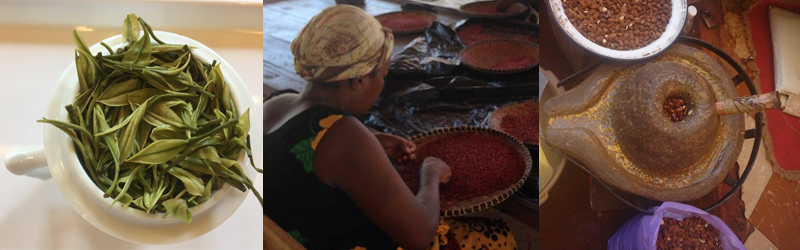
Biodiversity produces extremely diverse and valuable resources for human beings: food, health, energy, beauty, pleasure. These resources are often fragile. When managed with respect for ecosystems, work and traditional knowledge, they are levers for human well-being, protect biodiversity and the well-being of local rural people.
Tea, cocoa, coffee, aromatic and medicinal plants, spices and cosmetic ingredients are fragile resources appreciated by everybody.
Our approach
- a classical market approach (market research, monitoring and quality control, business plans, etc.);
- the principles of fair trade (fair and equitable payments, préparation to certification when desireable);
- compliance studies, specifically on the Nagoya Protocol on Access to Genetic Resources and the Fair and Equitable Sharing of Benefits Arising from their Utilization;
- the principles of an ecological economy (ecosystem review, accounting for externalities)
This approach allows to express the full potential of local know-how and ecosystems and agrosystems, creating value chains and brands of excellence, valued at their fair prices on national and international markets.
Our services
- Development of natural products: market study, quality control, business plans, capacity building.
- Ethics and sustainability: social responsibility, fair trade, organic agriculture, access and benefit sharing, certification.
- Legal advice: Convention on Biological Diversity and Nagoya protocol, regulation of imports in the European Union.
Our experience
- Ten years of expérience as a Fair Trade project manager for producers organizations and as a facilitator of an international community of practice on Fair Trade. Associate member of the World Fair Trade Organization.
- Twelve years of experience as a consultant for international cooperation agencies (UNDP, UNIDO, GIZ…) and for companies(cosmetics, ethical funds, etc.) in Latin America, Africa and South-East Asia.
- Expert of the Nagoya Protocol on Access to Genetic Resources and the Fair and Equitable Sharing of Benefits Arising from their Utilization, 10 studies conducted.
- Specialist in ecological economics, expert on access and benefit sharing of biodiversity and traditional knowledge.
- By sector: coffee (Latin America, East Africa), cocoa (Madagascar, West Africa), tea (China and Vietnam), cosmetic ingredients (Latin America, Africa), handicrafts and textiles (global).
Pierre worked as an expert for GIZ Nepal to support the herbal companies from Nepal to have business meetings with relevant importing companies of Europe. He was very dedicated and proactive in his approach which was well appreciated by the Nepali delegation. I wish him all the best for his future endeavors.
Publication: “Biopiracy: What are the alternatives?”
I have the pleasure to announce you, after a year and half of research, the publication on January 24th 2012, in France, of my newest book: "Biopiraterie : quelles alternatives au pillage des ressources naturelles et des savoirs ancestraux ?" [Biopiracy: what...
Conference on alternatives to biopiracy at Centifolia 2011
Centifolia 2011, the International Congress in Cosmetics and Perfumery, which will be held in Grasse from October 19 to 21, 2011, is an adventure open to all the stakeholders of the beauty industry (Executives, Sourcing Directors, R&D, Buyers, CSR, Production,...
Biodiversité et partage équitable (2)
Biodiversité : deux mondes en dialogue Dans mon dernier post, j'ai évoqué les questions juridiques et éthiques relatives à l'usage des espèces natives et des savoirs indigènes sur celles-ci. Il a été question de la Convention sur la Diversité Biologique, de la notion...
La difficile mise en place de la traçabilité physique des produits de commerce équitable FLO
Les standards génériques du commerce équitable élaborés par FLO (Fairtrade Labelling Organization) prévoient, dans leur version de février 2009, la traçabilité physique des produits du commerce équitable. Cette mesure controversée s'impose à tous les acteurs...
Pierre W. Johnson
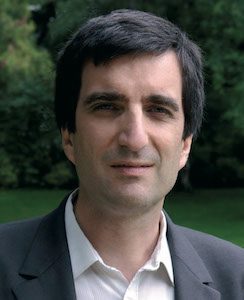
International consultant, study and sustainable development of natural products value chains. Specialist of markets of origin, quality and high value products. Expert on Access and Benefit Sharing.
Keynote speaker on transition to an ecological economy & society.
Member of the
International Value Links Association.
Associate expert to Tero.